There are two things you need to start hooping.
- A hoop that is actually the right size for you
- Tricks, transitions and technique to fill it with
Most people skip step one. They grab whatever hoop shows up at the toy store or the dollar shop, spend ten minutes getting frustrated, and decide hooping just isn’t for them.
It’s not you. It’s the wrong hoop. Let’s fix that first.
What is the right size hoop
Here are some sizes I like to start with, the ones I use myself and teach with.
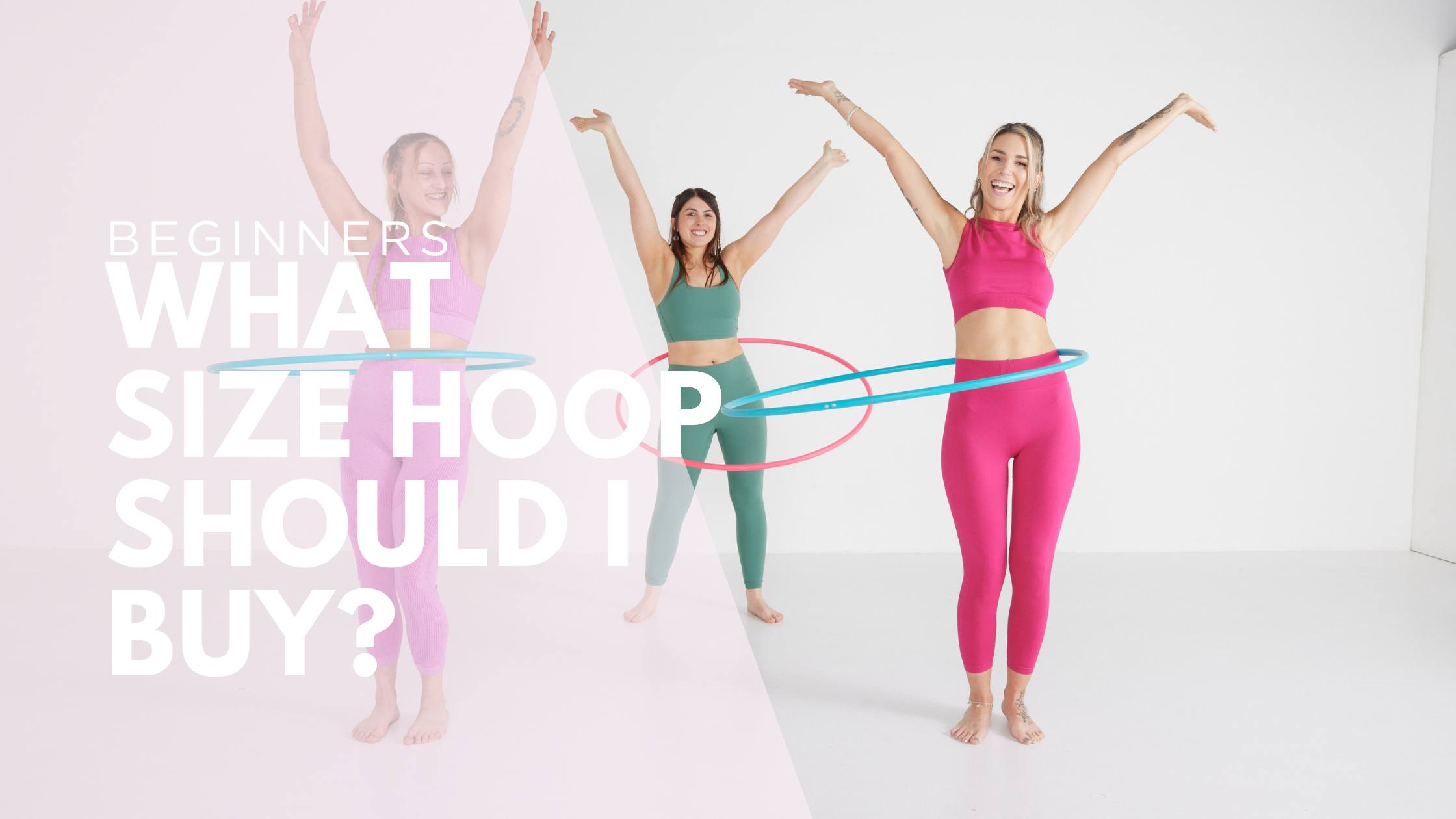
95cm / 37″ diameter, HDPE tubing (3/4″) — the one to start with if you are learning to waist hoop. Bigger and slower, which means more time to catch the hoop and feel what’s happening before it falls.
Note: all bodies are wonderful; all bodies are different so this is just a rough estimate. I started with a 100cm diameter hoop made from irrigation pipe in 1″ tubing. I am 167cm tall.
90cm / 34″ or smaller, polypro tubing (3/4″) — once you’re moving and want something lighter for tricks and flow.
Like this hoop I am using in the 30 Days of Flow series
75cm / 29″ diameter, polypro tubing (5/8″) — faster and lighter again, a favourite for twin hooping and technical trick work.
If you’ve only ever tried a kids’ size hoop from a discount store and felt like a failure, that’s not a reflection on your body or your coordination. That hoop was never built for an adult frame moving at adult speed.
Note: Dollar store/kids hoops are not impossible to use for tricks. They are usually too small for onbody/waist hooping but can be a fun way to play with some tricks. The problem is they are often not durable and will end up in landfill pretty quickly.
How to actually measure yourself for a beginner on body hoop (an old school technique for measuring your on-body hoop)
Stand up straight. Measure from the floor in front of your toes to somewhere between your belly button and your chest. That gives you a solid approximate diameter. Most hoop makers sell by this measurement, so it’s worth having your own number before you go shopping.
A few more things that matter more than people expect:
Tubing weight changes everything. There are many types but if you are just starting out there are roughly three types to consider: “fitness” or power tubing (25mm, the thickest), dance or regular tubing (20mm), and polypro or featherlight tubing (16mm). Every hoop maker varies slightly, so when in doubt, ask.
Buying online and unsure? Message the seller. Let them know you are starting out and ask what they’d recommend for a beginner. Good hoop makers want you to get the right size as much as you do.
Heavier is not better. A hoop that’s too heavy can restrict your movement, which is the opposite of what you want if you’re planning to dance, flow or trick with it. Skip the ultra heavy “fitness” hoops being marketed as a shortcut. For dance and fitness hooping, look for something in the 200 to 800 gram range. Anything heavier gets genuinely risky for your joints, your face, and anything breakable nearby if you lose control mid trick.
You’ll tone up and burn energy from movement, not from weight. The research on hooping for fitness backs this up again and again: it’s the aerobic, full body movement that does the work, not ten minutes of standing still with a heavy hoop around your waist. But this is a choose your own adventure, it is all fun and all can allow access to flow states.
Most hoopers end up with more than one hoop. As your skills grow, your needs change, and your hoop stack tends to grow with you.
You can make your own, too, if you want to get into the craft side of things. Polypro tubing and connectors are easy enough to find, and decorating your own hoop with tape is half the fun once you’re hooked.
Now you have a hoop. Here’s what to do with it
Sizing is step one. Step two is learning the moves.
Start here, completely free: Learn to Hoop in 7 Easy Steps — waist hooping fundamentals, built for total beginners.
Ready to go deeper? The 28 Day Hooper’s Starter Pack takes you from your first spin through to full body flow, at your own pace, with no dance background required.
Want a taste of tricks first? 10 Tricks for Total Beginners is free and gets you flowing faster than you’d think.
Curious what else is out there? Browse the full course library or check the course guide if you’re not sure where to start.
Size matters more than most beginners realise, and it’s the single easiest fix between “I tried hooping once and it didn’t work” and “I actually caught my flow.” Get the size right, then come learn what to do with it.